
Introduction
If you’ve ever spent time in the warm, humid climates of the southeastern United States, you’ve likely encountered one of its most infamous residents: the palmetto bug. This term, evoking images of prehistoric critters scuttling beneath lush palm fronds, is shrouded in a mix of folklore, disgust, and misunderstanding. But what exactly is a palmetto bug? Is it a unique monster of the South, or simply a common pest wearing a regional disguise? The truth is both mundane and fascinating, weaving together biology, entomology, and cultural linguistics.
A Rose by Any Other Name: The Identity Crisis of the Palmetto Bug
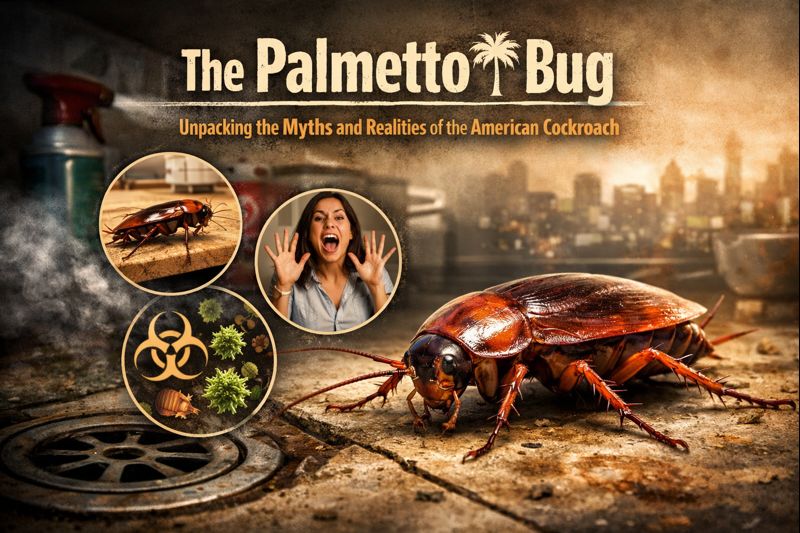
First, let’s clear the air: the “palmetto bug” is not a distinct scientific species. It is a colloquial umbrella term used primarily in the Carolinas, Georgia, Florida, and other Gulf Coast states. Most often, it refers to the American cockroach (Periplaneta americana). Ironically, this species is not native to America but likely hitched rides from Africa on trade ships centuries ago. It is one of the largest common roach species, reaching up to two inches in length, with a reddish-brown body and a distinctive yellowish figure-eight pattern on the back of its head.
Less frequently, the name can also be applied to other outdoor-dwelling roaches like the smoky brown cockroach or the Florida woods cockroach. The common thread is their association with damp, decaying organic matter in outdoor environments—precisely the conditions found in and under palmetto trees (sabal palms), hence the name. By calling it a “palmetto bug,” residents perform a subtle psychological trick: it sounds more like a native woodland creature and less like the globally reviled “cockroach” that signifies filth and infestation. It’s a euphemism born of Southern hospitality, even for insects.
Biology and Behavior: Not Your Kitchen’s German Roach
Understanding the palmetto bug means distinguishing it from its more problematic cousin, the German cockroach. While German roaches are indoor specialists, thriving in the kitchens and bathrooms of human dwellings, the American cockroach is an outdoor adventurer. It prefers warm, humid climates and lives in mulch, leaf litter, tree holes, sewer systems, and, of course, palmetto groves. They are excellent fliers, particularly the males, and are often drawn to lights at night, leading to those heart-stopping moments when one clumsily buzzes into a porch light or, worse, a living room.
Their diet is one of decomposition. In the ecosystem, they play a crucial (if unglamorous) role as scavengers, breaking down decaying plant and animal matter. They are, in essence, nature’s tiny cleanup crew. Problems arise, however, when their natural habitat overlaps with ours. Drought, heavy rain, or loss of habitat can drive them indoors in search of moisture and food. Once inside, they may be found in damp basements, crawl spaces, garages, and around plumbing. Unlike German roaches, they don’t typically establish large, breeding infestations inside a home unless there is a chronic moisture issue. Their indoor presence is often a sign of an unwanted visitor, not a permanent colonizer.
The Myth and the Menace: Separating Fact from Fear
The palmetto bug’s size and sudden, frantic flights have earned it a legendary status, fueling many a tall tale and scream. Stories of them “charging” people or “attacking” are widespread. In reality, they are not aggressive. They are, however, thigmotactic, meaning they prefer to feel contact on all sides of their bodies. A flying roach may perceive a large, approaching human as a predator and, in its panic to escape, might fly erratically, sometimes toward a light source behind a person. The result is not an attack, but a terrified insect on a collision course.
Their reputation for being “dirty” also deserves nuance. While it’s true that American cockroaches can pick up bacteria (like Salmonella or E. coli) and parasitic worms from decaying matter and sewers, they are not nearly as potent disease vectors as houseflies or mosquitoes. The greater risk from an indoor incursion is the potential to trigger asthma and allergies, as their shed skins and feces contain proteins that are potent allergens for many people.
From an ecological perspective, they are a vital food source for a wide range of wildlife, including birds, reptiles, amphibians, and small mammals. In the grand food web, they convert detritus into energy for larger, more beloved creatures.
Coexisting and Controlling: Practical Advice for Homeowners
For those living in palmetto bug territory, complete eradication from the environment is impossible and ecologically unwise. The goal, instead, is exclusion and deterrence to keep the relationship strictly outdoor.
- Seal the Fortress: The single most effective step is to deny entry. Seal cracks and gaps around foundations, windows, doors, and utility pipes. Install tight-fitting screens on windows, attic vents, and crawl space access points. Pay special attention to areas where plumbing enters the home.
- Eliminate the Lure: Reduce outdoor harborage by keeping mulch, leaf piles, and firewood away from the house foundation. Keep palm fronds and dense shrubbery trimmed back. Ensure gutters are clean and downspouts direct water away from the house.
- Control Moisture: Fix leaking faucets, hoses, and irrigation systems. Use dehumidifiers in damp basements and crawl spaces. Ensure proper ventilation in attics and garages. A dry home is an uninviting home for a moisture-seeking palmetto bug.
- Think Before You Spray: Indiscriminate pesticide use outdoors can do more harm than good, killing beneficial insects and contaminating the environment. If indoor sightings become frequent, targeted gel baits or boric acid in out-of-the-way areas like crawl spaces can be effective. For persistent problems, consulting a professional pest management service is advisable. They can identify entry points and food sources, offering a targeted plan over a blanket chemical assault.
A Symbol of the South: More Than Just a Bug
Ultimately, the palmetto bug is more than an insect; it’s a cultural touchstone. It appears in Southern literature and stories as a fixture of the landscape, a shared experience that binds residents together in a chorus of understanding sighs and shudders. To fear them is natural, to disdain them is common, but to understand them is to gain a small insight into the complex ecosystem of the American South. They are a reminder of the wild, humid, fecund environment that persists just outside—and sometimes, despite our best efforts, inside—the human domain.
They are creatures of contrast: decomposers and allergens, fliers and scavengers, feared pests and important recyclers. The next time you hear the term “palmetto bug,” you can see past the myth to the reality—a hardy, ancient insect just trying to survive, whose greatest sin is being startlingly good at it in a place we call home. In the endless negotiation between civilization and nature, the palmetto bug is a persistent, six-legged ambassador from the world of palmetto fronds and damp earth, a tiny, unwitting reminder that we share our space with a wild and thriving world.