
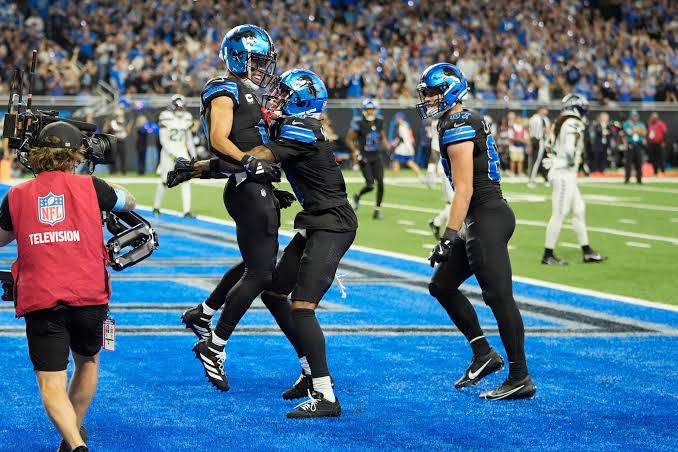
The clash between the Detroit Lions and the Seattle Seahawks in Week 4 of the 2024 NFL season turned out to be one of the most thrilling and statistically rich games of the year. Played at Ford Field, the Lions secured a resounding 42–29 victory over the Seahawks in front of an electric home crowd.
While the scoreboard suggested dominance by the Lions, the deeper story told by the numbers reveals an intriguing contrast — Seattle actually outgained Detroit in total yardage and possession time but failed to convert those advantages into points. Let’s break down the performances, stats, turning points, and overall implications of this exciting matchup.
Game Overview
This matchup carried historical weight. Before this meeting, the Seahawks had beaten the Lions in seven consecutive games, dating back to 2012. However, Detroit turned the tables with a near-perfect offensive execution led by quarterback Jared Goff, who delivered one of the most efficient performances in NFL history.
Seattle entered the game with strong momentum, boasting a dynamic offense behind Geno Smith and Kenneth Walker III, while Detroit’s defense and balanced offense had been steadily improving under head coach Dan Campbell. The stage was set for an explosive contest — and it certainly delivered.
Team Performance Summary
| Category | Seattle Seahawks | Detroit Lions |
|---|---|---|
| Total Yards | 516 | 389 |
| Passing Yards | 383 | 273 |
| Rushing Yards | 133 | 116 |
| First Downs | 38 | 21 |
| Time of Possession | 34:04 | 25:56 |
| Turnovers | 1 | 0 |
| Penalties | 8 for 70 yards | 12 for 101 yards |
Despite leading in nearly every yardage category, Seattle’s inability to finish drives and Detroit’s explosive big plays defined the outcome.
Detroit Lions: Offensive Brilliance
Jared Goff – Quarterback
Stats:
- Completions/Attempts: 18/18 (100%)
- Passing Yards: 292
- Touchdowns: 2
- Interceptions: 0
Jared Goff’s performance was historic. Completing all 18 of his pass attempts, Goff achieved a 100% completion rate, setting an NFL record for the most completions without an incompletion in a single game (minimum 15 attempts). His precision passing, pocket awareness, and leadership powered Detroit’s offense.
Beyond the numbers, Goff’s decision-making was flawless. He spread the ball efficiently to his playmakers, executed screen passes, and handled pressure with calm confidence. His chemistry with Amon-Ra St. Brown and Jameson Williams created major headaches for Seattle’s secondary.
Jahmyr Gibbs – Running Back
Stats:
- Carries: 14
- Rushing Yards: 78
- Touchdowns: 2
Rookie running back Jahmyr Gibbs had his breakout game, showing why Detroit drafted him as a versatile weapon. Gibbs combined speed and agility with strong vision, finding gaps and making the most of limited touches. Both of his touchdowns came at crucial moments — one in the second quarter to extend the lead, and another in the third that helped keep the Lions in control.
His ability to contribute in both the running and passing game gave Goff multiple options and forced Seattle to stay on its heels defensively.
David Montgomery – Running Back
Stats:
- Carries: 8
- Yards: 25
- Touchdowns: 1
Montgomery provided short-yardage reliability, including a 1-yard rushing touchdown that opened the scoring for Detroit. While his numbers weren’t flashy, his physical running style complemented Gibbs’ explosiveness and helped maintain offensive balance.
Amon-Ra St. Brown – Wide Receiver
Stats:
- Receptions: 6
- Yards: 45
- Touchdowns: 1
- Passing Touchdowns: 1 (to Jared Goff)
Amon-Ra St. Brown continued his reputation as Detroit’s most consistent receiver. Beyond his receiving stats, he threw a trick-play touchdown pass to Jared Goff, showing Detroit’s creativity on offense. His route-running precision and reliability in short-yardage situations kept drives alive.
Jameson Williams – Wide Receiver
Stats:
- Receptions: 2
- Yards: 80
- Touchdowns: 1
Jameson Williams delivered the game’s most electrifying moment — a 70-yard touchdown reception from Goff that completely shifted momentum in Detroit’s favor. His blazing speed stretched Seattle’s defense, opening space for other receivers underneath.
Seattle Seahawks: Yardage Without Reward
Geno Smith – Quarterback
Stats:
- Completions/Attempts: 31/44
- Passing Yards: 395
- Touchdowns: 1
- Interceptions: 1
Geno Smith’s 395 passing yards represented one of his best statistical performances. He consistently moved the ball upfield, finding targets across the middle and deep zones. However, a late-game interception hurt Seattle’s comeback attempt.
Despite his yardage success, Smith struggled to finish drives with touchdowns. Seattle’s offensive line allowed occasional pressure, forcing quick throws and reducing red-zone efficiency.
Kenneth Walker III – Running Back
Stats:
- Carries: 18
- Rushing Yards: 80
- Touchdowns: 3
Walker was Seattle’s offensive powerhouse, scoring all three of their rushing touchdowns. His mix of strength and explosiveness made him difficult to contain, and he repeatedly found ways to exploit Detroit’s defensive gaps.
Still, despite Walker’s heroics, Seattle’s inability to maintain balance late in the game limited his impact in the fourth quarter.
DK Metcalf – Wide Receiver
Stats:
- Receptions: 7
- Yards: 104
- Touchdowns: 0
DK Metcalf was Geno Smith’s primary weapon, crossing the 100-yard mark with dominant playmaking. His physicality and route precision created consistent separation, but the Lions’ secondary tightened coverage near the end zone, preventing a touchdown.
Tyler Lockett – Wide Receiver
Stats:
- Receptions: 6
- Yards: 78
- Touchdowns: 0
Lockett provided reliability and deep-threat potential, keeping drives alive with key third-down catches. However, like Metcalf, he struggled to find the end zone, despite multiple red-zone looks.
Defensive Highlights
Detroit Lions Defense
While the statistics favored Seattle in yardage, Detroit’s defense stepped up in key moments. Kerby Joseph’s interception in the final quarter sealed the game, halting Seattle’s momentum. The defensive line pressured Geno Smith repeatedly, forcing hurried throws and limiting explosive plays when it mattered most.
Detroit’s secondary showed resilience, bending but not breaking. Despite giving up nearly 400 passing yards, they tightened coverage near the goal line and produced the critical takeaway that defined the closing minutes.
Seattle Seahawks Defense
Seattle’s defense struggled to contain Detroit’s explosive plays. The 70-yard touchdown to Williams and several efficient drives led by Goff exposed gaps in coverage and miscommunication among defensive backs.
The front seven generated moderate pressure, including a fourth-quarter sack in the end zone that resulted in a safety. However, inconsistency and lack of discipline in tackling prevented Seattle from sustaining defensive success.
Key Moments That Defined the Game
- Opening Drive Dominance:
Detroit opened with a 12-play, 93-yard drive capped by Montgomery’s 1-yard touchdown, setting an aggressive tone early. - Gibbs’ Back-to-Back Scores:
Jahmyr Gibbs’ two rushing touchdowns in the second quarter extended the Lions’ lead to 21–7, giving them breathing room. - Jameson Williams’ 70-Yard Bomb:
In the third quarter, Goff hit Williams deep for a 70-yard touchdown, shifting momentum firmly in Detroit’s favor. - Seattle’s Late Surge:
Kenneth Walker scored his third touchdown in the fourth quarter, cutting Detroit’s lead, but Geno Smith’s interception on the following drive halted Seattle’s comeback. - Defensive Interception:
Kerby Joseph’s pick in the closing minutes ended Seattle’s hopes and sealed Detroit’s victory.
What the Numbers Reveal
While the Seahawks dominated possession and total yardage, the Lions thrived on efficiency. Every offensive drive felt calculated — shorter possession time but higher scoring yield.
Seattle’s 38 first downs compared to Detroit’s 21 suggest consistent ball movement, but Detroit’s ability to finish drives and create explosive plays proved decisive.
The Lions’ zero turnovers contrasted with Seattle’s single interception — a small but critical difference that impacted the outcome.
Tactical Analysis
Detroit’s game plan revolved around precision and unpredictability. Offensive coordinator Ben Johnson mixed quick passes, creative trick plays, and balanced runs to keep Seattle guessing. The perfect passing performance by Goff reflected smart play design and flawless execution.
Seattle’s plan was more traditional: control time of possession and rely on yardage accumulation. However, their red-zone efficiency faltered. Despite multiple drives into Detroit territory, they often settled for short gains or field position without scoring.
Defensively, Detroit’s bend-don’t-break philosophy worked. They gave up yardage but tightened coverage near the end zone. Seattle’s defense, conversely, looked uncoordinated against Detroit’s misdirection plays and deep throws.
Player Impact Beyond the Stats
- Jared Goff’s leadership boosted team confidence, proving that efficient football wins games even against high-yardage opponents.
- Amon-Ra St. Brown’s creativity added a new dimension to Detroit’s offense, showing versatility beyond receiving.
- Kenneth Walker’s three-touchdown performance reaffirmed his role as Seattle’s offensive centerpiece.
- DK Metcalf and Tyler Lockett’s production highlighted Seattle’s offensive strength but also their frustration at missed red-zone opportunities.
Broader Implications for Both Teams
For the Detroit Lions:
This win was monumental. It not only broke their long losing streak against the Seahawks but also proved they could beat a strong NFC contender through smart play-calling and execution. Jared Goff’s performance reinforced Detroit’s faith in him as a franchise quarterback.
The Lions’ offensive creativity — mixing trick plays, deep passes, and efficient runs — showed they are evolving into one of the most balanced attacks in the league. Defensively, while yardage allowed remains a concern, the team’s clutch playmaking ability gives them resilience heading into future matchups.
For the Seattle Seahawks:
Despite the loss, Seattle’s offense showed promise. Geno Smith’s 395 passing yards and Walker’s three touchdowns prove they can produce points and yardage at will. However, the defense’s inability to contain explosive plays and the offense’s lack of red-zone precision highlight areas for improvement.
If Seattle can turn their long drives into touchdowns and tighten defensive communication, they remain a playoff-caliber team. The loss may sting, but it also provides valuable lessons on execution and discipline.
Conclusion
The Seahawks vs. Lions game of 2024 was a spectacle of contrasting styles. Seattle dominated possession and yardage, yet Detroit dominated execution and efficiency. Jared Goff’s perfect passing performance, Jahmyr Gibbs’ breakout game, and key defensive moments propelled Detroit to a memorable 42–29 victory.
Seattle’s statistical dominance could not outweigh their missed opportunities. For Detroit, this game symbolized growth — a disciplined, dynamic team capable of defeating opponents through precision rather than pure power.
In the end, football once again proved that it’s not about who gains the most yards, but who makes the most of their moments. Detroit did exactly that.
Would you like me to add a title image suggestion and article category (for blog use)?