
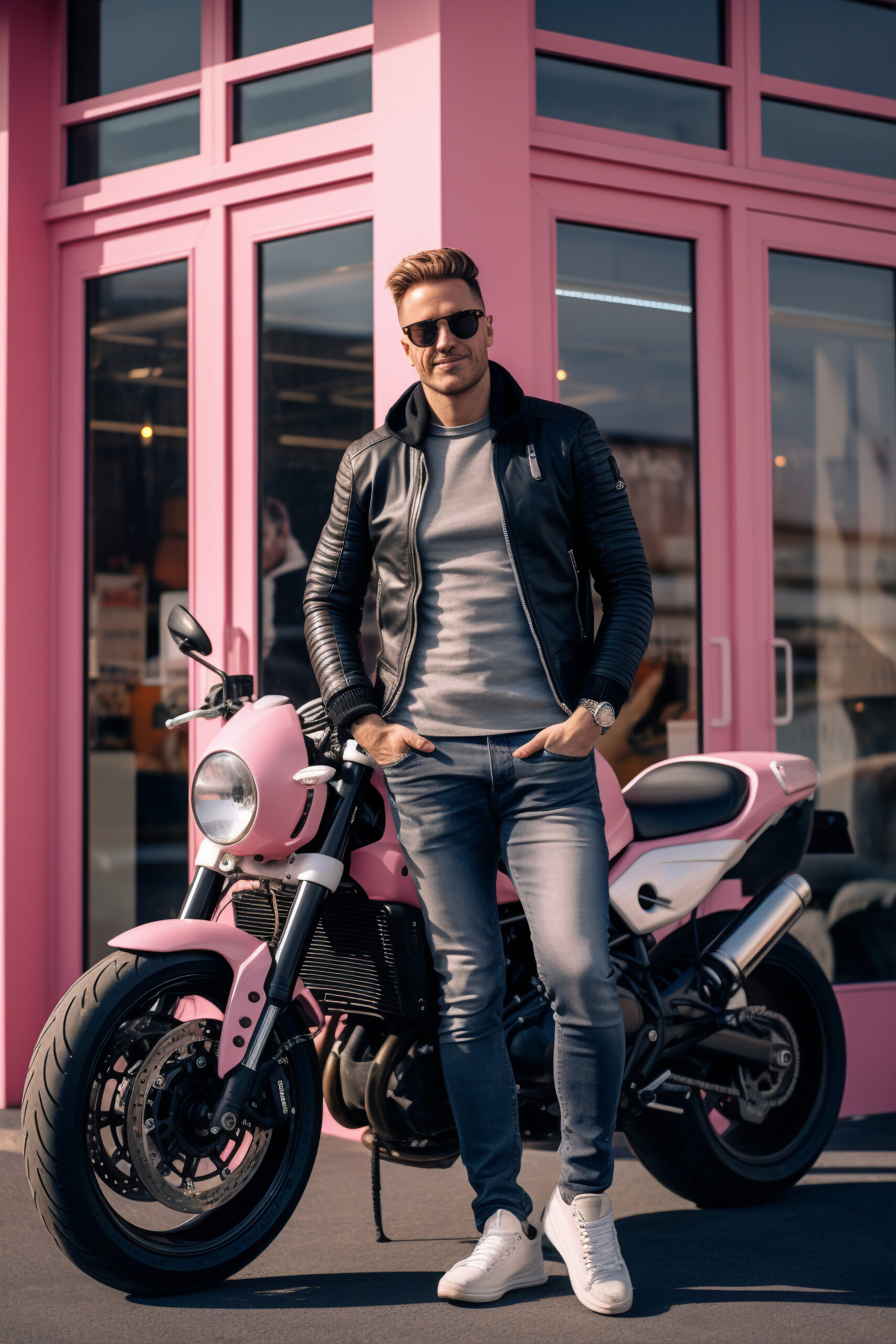
Guy Willison is one of the UK’s best-known custom motorcycle builders — a designer, fabricator, TV personality and small-batch manufacturer whose work sits at the intersection of museum-quality restoration, radical one-off customs and practical, rideable motorcycles. Over a career that spans decades he’s earned the affectionate nickname “Skid,” collaborated with mainstream manufacturers, appeared on television, launched his own limited-run motorcycle company and kept one foot firmly in the messy, hands-on world of garages, scrap yards and creative problem-solving.
From tinkering to reputation: how a maker becomes “Skid”
Guy Willison’s career reads like a classic maker’s arc. He learned by doing: taking engines apart, re-imagining frames and customising donor bikes until they became something new. Over time that hands-on reputation attracted attention from other builders, dealers and TV producers who noticed that Willison could combine sympathetic restoration with bold creative moves — a rare mix that allowed old machines to perform better while also looking distinct and thoughtful.
That reputation carried him into televised work and public events where his combination of technical knowledge and easygoing personality made him an appealing figure on camera. Through TV appearances and live events he developed a public profile that amplified his workshop output: people began to look for the “Skid” touch — bikes that showed obvious craftsmanship but retained mechanical honesty.
The 5Four story: making limited runs for riders, not collectors
In December 2018 Willison founded 5Four Motorcycles with a clear brief: build individually numbered, limited-edition, hand-built machines “for the few, not the many.” Rather than becoming another high-volume manufacturer, 5Four positioned itself to produce carefully considered motorcycles — reworked classics and modern retros with limited production numbers and attention to detail not commonly available in mass manufacturing.
5Four’s early releases exemplified that approach: limited runs based on reputable donor platforms (such as Honda CB series models), with bespoke bodywork, tuned components and a builder’s checklist of improvements — suspension, brakes, ergonomics and finish. These bikes were not inexpensive, but they offered buyers an experience closer to commissioning a small coachbuilder than ordering a production-line new motorcycle. The handover stories from owners reflect that the 5Four product is as much about emotional ownership and nostalgia as it is about horsepower.
Signature projects — where Willison’s vision shows most clearly
Several projects crystallise why Willison is respected in the motorcycling world: they combine technical ingenuity, aesthetic risk-taking and practical engineering.
- Norton Commando 961 Street redesign: Willison redesigned the Norton Commando 961 Street in a limited run that attracted strong interest and sold out quickly. The project demonstrated his ability to work with heritage marques and reinterpret classic lines for modern performance without losing the original character of the bike.
- Honda Grom “Hold On” drag-style build: In a more playful, headline-grabbing vein, Willison teamed with others to create an extreme turbo-charged, nitrous-equipped Honda MSX125 (Grom) — a tiny bike turned into a pro-street dragster piece. The build shows his skill in packaging and fabrication: stretched swingarms, turbo plumbing, bespoke bodywork and functional engineering all executed at a small scale.
- Auction and collection pieces: Willison’s own collection and machines he’s worked on have appeared in auctions and specialist magazines, including interesting prototypes and restored classics — showing his fluency with both contemporary custom work and historically significant bikes.
TV, public persona and the “Skid” brand
Willison’s television appearances and live events have been crucial to his public profile. He’s been visible on motorcycle shows and related programming where his approachable, practical style plays well with audiences: he explains problems clearly, enjoys the craft, and brings a non-precious attitude to machines that might otherwise be treated as untouchable icons. That authenticity — the sense that he’s a maker, not a marketing persona — helped him build trust with both enthusiasts and customers.
Because motorcycle culture mixes spectacle with genuine technical skill, Willison’s presence on camera has amplified his ability to sell limited production bikes, to consult on special builds and to participate in shows and museums. The National Motorcycle Museum and other institutions have hosted him for live events, where the public can see the work and talk to the builder directly — a powerful form of brand validation in a niche industry where reputation is everything.
How Willison builds: philosophy and workshop practice
Reading Willison’s work, you pick out recurring ideas:
- Respect for provenance: Whether the donor bike is a post-war classic or a modern Honda, Willison tends to respect the original engine, frame and character. He adds performance and aesthetics without fundamentally betraying the motorcycle’s lineage.
- Function first: Even the most radical customs are built to ride. Suspension, braking and ergonomics are typically upgraded rather than left as afterthoughts. That ethos creates bikes that look theatrical yet are surprisingly well behaved on the road.
- Materials and finish: Willison’s machines show careful metalwork, tidy welds, considered paint and leather trim. The finish work signals a craftsman’s commitment to detail — something collectors and serious riders both notice.
- Narrative: Each build tells a story — whether it’s a reimagined Norton, a modern 5Four edition or a race-inspired Grom. Willison’s projects often lean into a concept and then follow it rigorously rather than adding a mishmash of trending parts.
This combination of design discipline and practical engineering is what differentiates his output from both show-only customs and purely production models. Riders get a meticulously considered machine that also reflects the personality of the builder.
Business realities: small-batch manufacturing and community trust
Running a small manufacturer in the motorcycle world is hard. It’s an industry of thin margins, compliance challenges, supplier uncertainties and intense customer expectations. Willison’s 5Four approach — limited editions, numbered runs, leveraging reputation and public appearances — is a smart strategy to make a sustainable business out of craft: scarcity improves desirability, direct storytelling (events, workshops, TV) builds trust, and working with reputable donors and established partners (dealers, show organisers) reduces risk.
That said, the economics of low-volume builds mean long lead times, bespoke parts and elevated costs. For buyers, the appeal is often emotional: ownership of a carefully curated machine that feels more like a bespoke product than a commodity. For Willison, the model trades scale for control, ensuring each bike carries his stamp in a way mass manufacturing rarely allows.
Influence, collaboration and the wider scene
Willison’s role extends beyond his workshop. He collaborates with artists, other builders and mainstream manufacturers; he participates in rallies and events; and he provides visibility for the smaller-scale builder ethos in a market dominated by big OEMs. Collaborations like the Grom project show how a mainstream brand can work with indie builders to create excitement and reach enthusiastic micro-audiences. Those projects serve both parties: builders get resources and exposure, brands get authenticity and fresh design angles.
At the same time, Willison’s visibility helps younger fabricators — observers learn technical tricks, see the finish standards expected at high levels, and get a sense of how to build a sustainable, reputation-based business around craftsmanship. His presence at events and on social platforms amplifies those lessons, creating a kind of informal apprenticeship network for the next generation of makers.
Criticisms and constraints: what a builder must accept
A few unavoidable realities temper the romantic view of small-batch customising:
- Cost vs. accessibility: Hand-built bikes come at a premium price, which restricts the audience to enthusiasts who can afford the niche. That means builders must constantly justify the cost with quality and story.
- Regulatory pressure: Modern emissions, safety and homologation rules can complicate creative builds — especially when modifying modern donor bikes. Designers must balance originality with road legality.
- Sustainability and supply chains: Small builders rely on suppliers and specialist components; delays, rising costs or unavailable parts can slow production or increase expenses.
Willison and builders like him mitigate these by working with established suppliers, forming partnerships with dealers, and sometimes centring projects on donor platforms that are robust and parts-supported (for example, certain Honda and classic British platforms). The result is creative work that still respects practical constraints.
The cultural meaning of Willison’s work
Beyond the technical and business details, Willison’s bikes matter culturally. They signal a yearning for tangible craft in a world of disposable objects. They reassert the motorcycle as a site of individual expression and reclaimed labour — something you can shape with tools and imagination. In an era where digital design often replaces hands-on making, Willison’s practice reminds riders and non-riders alike that skilful metalwork and careful engineering still produce experiences machines can’t digital-only substitutes mimic.
His work also bridges generations: older riders see continuity with classic design; younger builders see a path to inventive, do-it-yourself culture that’s still economically viable when paired with good storytelling and limited manufacturing. That cross-generational appeal is a big part of why his name pops up at museums, auctions and specialist press as well as grassroots bike meets.
Where Guy Willison goes next
Predicting the next moves for a maker like Willison means watching a few signals: new limited editions from 5Four, additional collaborations with OEMs or art/fashion partners, more public appearances or museum events, and experimental one-offs that push both engineering and aesthetic boundaries. He has already shown the ability to move between show builds (like the turbo Grom), limited production (5Four CB and CB1100 projects) and heritage reworks (Norton Commando reinterpretations). Each of these lanes offers fertile ground for future innovation.
For enthusiasts, the practical takeaway is straightforward: when a Willison bike appears for sale or on show, it’s worth paying attention. His work combines maker authenticity with craftsmanship, and in a market crowded with both cheap customs and over-polished mass products, that combination still cuts through.
Final thoughts
Guy Willison is more than a name on an owner’s manual or a TV credit. He embodies a particular strand of motorcycling culture — one that values tangible craft, smart engineering and storytelling. From garage tinkering to founding 5Four Motorcycles, from turbocharged showpieces to carefully considered limited editions, his career shows how a skilled builder can turn hands-on expertise into a small but influential brand. Whether you’re a rider who cares about how a bike feels, an admirer of fine metalwork, or a younger builder looking for a model of how to make a living at craft, Willison’s work offers lessons in discipline, imagination and the art of making real things that people want to own.