
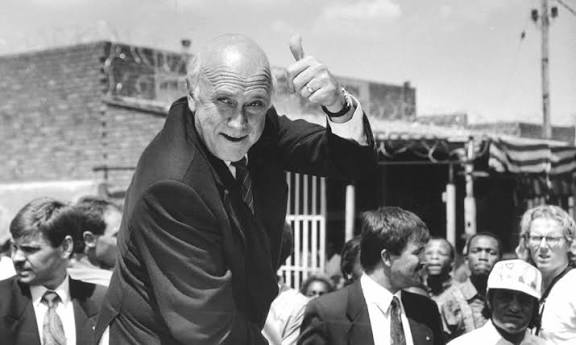
Haiku, the compact Japanese poetic form consisting of three short lines, has long been used as a way to distill complex emotions or historical moments into a few carefully chosen words. When applied to major global figures, haiku can become a unique medium for interpreting legacies, sparking emotion, or inviting critical reflection. One such figure is F.W. de Klerk—South Africa’s last apartheid-era president and a man whose legacy continues to inspire debate, admiration, discomfort, and academic inquiry.
Creating or analyzing a “F.W. de Klerk haiku” is not only an exercise in poetry but also an exploration of a layered and often polarizing historical narrative.
F.W. de Klerk, who served as State President of South Africa from 1989 to 1994, is remembered as the leader who began the legal dismantling of apartheid—releasing Nelson Mandela from prison, unbanning liberation movements, and setting the country on a path toward multiracial democracy. Yet he is also remembered for his early support of the apartheid system, as well as ongoing debates about the extent of his remorse and accountability.
A haiku about de Klerk must therefore balance subtlety with symbolism, awareness with critique, and simplicity with historical weight. In this article, we explore the meaning, impact, and creative possibilities of writing a haiku on F.W. de Klerk, while reflecting on the deeper themes of transformation, justice, regret, and national change.
Understanding the Purpose of a Haiku on F.W. de Klerk
Haiku traditionally focuses on nature, seasons, or fleeting beauty. But over time, the form has evolved, allowing writers to address politics, philosophy, conflict, and human beings who influenced the world. Haiku thrives on brevity, but the emotions or reflections behind it can be vast.
Writing a haiku on F.W. de Klerk might serve several purposes:
1. Capturing His Historical Pivot
De Klerk made a dramatic shift from enforcing apartheid structures to the task of dismantling them. Haiku, with its emphasis on transformation or contrast, can capture that pivot.
2. Expressing Mixed Emotions
His legacy is not simple. Some view him as a reformer; others say his reforms came too late or were motivated by political pressure rather than moral awakening. A haiku can express layered emotions without lengthy explanation.
3. Memorializing a Complex Moment in History
Haiku allows writers to “freeze” a historical moment in imagery—such as Mandela’s release, the unbanning of the ANC, or the atmosphere of negotiation.
4. Using Symbolism Instead of Direct Argument
Instead of arguing about politics directly, poets may use imagery like dawn, shadows, winter, or broken walls to represent change.
Sample Haikus About F.W. de Klerk
Below are a few original haikus that show different perspectives. They are not the article’s focus, but they help illustrate how poetry can address his legacy.
Haiku 1: Transformation
Winter walls crumble,
Footsteps echo toward the dawn,
Old hands free the light.
Haiku 2: Conflict and Contradiction
Shadow and sunlight,
A man stands inside both worlds,
History decides.
Haiku 3: Negotiation Era
Across a small table,
Decades of silence unfold—
New voices rise up.
Haiku 4: Legacy Debate
Fog over Cape Town,
Whispers of praise, cries of blame
Drift in the same wind.
Each of these haikus uses imagery—winter, dawn, fog, sunlight—to represent aspects of de Klerk’s complicated identity and the era he shaped.
Why Haiku Works for Difficult Histories
Political events and figures are often discussed through speeches, essays, and long debates. Haiku offers something radically different: an emotional snapshot that allows readers to reflect inwardly. Here’s why the form works so well:
1. Brevity Encourages Depth
With only a few syllables allowed per line, each word carries symbolic weight. Writers select imagery that represents huge ideas.
2. It Invites Interpretation
Unlike academic essays, haiku does not tell the reader what to think. In the case of F.W. de Klerk, this is powerful because interpretations vary widely.
3. It Honors Emotional Complexity
Historical figures associated with oppression and reconciliation create emotional contradictions. Haiku embraces ambiguity instead of resisting it.
4. Haiku Is Universal
Because haiku is rooted in nature and metaphor, it allows different cultures to process shared global events in a symbolic, neutral way.
Themes to Explore in a F.W. de Klerk Haiku
Writers crafting poetry about de Klerk tend to explore several recurring themes. Each theme represents a facet of his legacy, offering material for symbolic representation.
1. Change and Transition
De Klerk represents a “before and after” period in South African history. Haiku can capture this through images of weather shifts or breaking barriers.
2. Responsibility and Remorse
His apologies for apartheid were often seen as incomplete or inconsistent. Poets may explore themes of guilt, hesitation, or moral ambiguity.
3. Dialogue and Negotiation
He engaged in lengthy negotiations with Mandela and other leaders. Symbols of bridges, tables, doors, and crossroads often appear in poetic interpretations.
4. Liberation and Hope
The dismantling of apartheid brought global hope. Imagery such as sunrise, open fields, or birds taking flight reflects optimism.
5. The Weight of History
De Klerk’s decisions will be debated for generations. Poets may lean into imagery of echoes, shadows, or long rivers to represent historical memory.
Interpreting Haiku Through the Lens of South African History
A single haiku might communicate different meanings depending on the reader’s background. A South African reader who lived through apartheid may interpret metaphors differently from someone reading about the period in textbooks.
For example:
- Winter walls crumble
may evoke the emotional chill of apartheid’s brutality, followed by the thaw of democratic reforms. - Shadows and sunlight
might represent a man whose actions include both oppression and redemption.
The power of haiku lies in these open-ended interpretations. Instead of answering questions, it invites readers to ask more.
The Role of Imagery in F.W. de Klerk Haiku
Crafting a haiku on de Klerk often requires meaningful imagery. Here are some symbolic elements commonly used and their possible associations:
Light and Darkness
Used to represent moral uncertainty, political transformation, or the contrast between apartheid and democracy.
Walls or Barriers
Symbolize segregation, oppression, or the systems that once divided South Africans.
Bridges
Represent negotiation, dialogue, and nation-building.
Morning or Dawn
Frequently used to symbolize Mandela’s release and the country’s transition.
Fog or Mist
Represents confusion, conflicting emotions, or unresolved historical debates.
Seasons
Especially winter (apartheid) vs. spring (new democracy).
These metaphors allow the haiku to function as a small but powerful narrative of de Klerk’s impact.
Cultural Sensitivity When Writing About F.W. de Klerk
Because de Klerk remains a controversial figure, writing poetry about him—especially in such a concentrated form—must be done with care. A haiku can risk oversimplifying issues if written without awareness. Writers should:
- Acknowledge the suffering caused by the apartheid system
- Avoid romanticizing historical oppression
- Be thoughtful about representing victims, activists, and freedom fighters
- Recognize that de Klerk’s actions had both positive and painful ripple effects
Haiku should balance honesty with respect, symbolism with truth, and imagery with historical context.
Why the Topic Continues to Inspire Poets
Even decades after apartheid ended, people continue writing poems, articles, and reflective pieces about de Klerk. The reasons include:
1. His Legacy Is Still Debated
Whether he deserves praise or merely acknowledgment remains a global discussion.
2. Poetry Helps Process Trauma
For many South Africans, poetry is a medium through which they process their lived experiences.
3. His Actions Marked a Turning Point
Writers are often drawn to moments where history shifts dramatically.
4. Haiku Provides a Neutral Platform
It allows both criticism and recognition without forcing a single conclusion.
Conclusion: The Power of a Few Words
A “F.W. de Klerk haiku” is more than a poem. It is a lens through which we can explore national memory, political transformation, human contradiction, and the unending dialogue about justice in South Africa. Through only a few lines, haiku captures what long articles sometimes cannot: the emotional landscape behind historical change.
Because de Klerk’s story is simultaneously one of oppression, negotiation, and democratic transition, representing him in haiku requires thoughtful symbolism and emotional nuance. It allows readers to engage with his legacy in a reflective, meditative way—one that encourages contemplation rather than judgment, exploration rather than certainty.
Haiku distills history into imagery, and in doing so, it lets the reader feel the cold of the “winter walls,” the brightness of a “new dawn,” and the lingering “echoes” of a complex past. For a figure as debated as F.W. de Klerk, this poetic form serves as a bridge between memory and meaning—between what was, what changed, and what continues to shape South Africa today.