
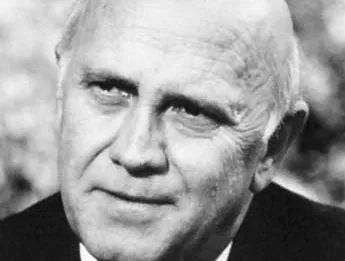
The modern digital world has brought poetry to places where politics, culture, and history intersect. One interesting creative experiment that has emerged from this mixture is the F.W. de Klerk haiku. The idea sounds simple—write a haiku about Former South African President Frederik Willem de Klerk—but behind it lies a deep world of symbolism, political memory, and artistic challenge.
F.W. de Klerk was one of the most significant political figures of the 20th century. He served as the last president of apartheid-era South Africa and worked alongside Nelson Mandela to negotiate the end of institutionalized racial segregation. His role was controversial—respected by some, criticized by others. Capturing such a complex legacy in just 17 syllables (a traditional haiku form) is both a poetic challenge and a historical exercise.
This article explores what an F.W. de Klerk haiku is, why people write them, how poetry interacts with his legacy, and how a short verse can compress decades of struggle, compromise, and transformation.
Who Was F.W. de Klerk?
To understand haiku about de Klerk, one must understand the man himself.
- Born: 1936, Johannesburg, South Africa
- President: 1989–1994
- Major contribution: Ended apartheid laws and negotiated transition to democracy
- Nobel Peace Prize: Shared with Nelson Mandela in 1993
He made the historic announcement in 1990 to release political prisoners, including Mandela, and to lift bans on anti-apartheid organizations. His government worked toward the first democratic elections held in 1994, which placed Mandela in power.
Supporters call him a reformer; critics argue he moved too late and was part of the regime that enforced apartheid in the first place. This duality is one reason poets and writers find him fascinating—he is a symbol of both dismantling injustice and being part of it.
Why Haiku?
Haiku is a traditional Japanese poetic form with strict rules:
5–7–5 syllable structure
Quick and vivid imagery
Often includes nature, emotion, or powerful symbolism
Haiku is the art of saying much with very little. History, however, is long, complicated, and heavy. So when poets attempt a “F.W. de Klerk haiku,” they are trying to reduce massive historical meaning into a short poetic flash.
This transformation is powerful because:
- It forces reflection
- It invites debate
- It turns politics into art
- It shows how poetry can capture emotion faster than essays or speeches
A haiku about de Klerk can express hope, anger, forgiveness, irony, or inspiration. It can praise him or criticize him. It can show South Africa’s pain or its rebirth.
Examples of F.W. de Klerk Haiku
Here are different styles of haiku that people might write about him—some positive, some questioning, some neutral and reflective.
Haiku of Historical Change
Walls of law fell down,
Mandela walked into sun—
New nation breathed out.
This haiku focuses on hope, freedom, and rebirth.
Haiku of Controversy
Peace signed by stained hands,
A lion turns into a lamb—
History remembers.
This one reflects the debate around whether he was a hero or a late reformer.
Haiku of Responsibility
He opened locked gates,
but the chains had been his once—
Truth has two meanings.
It shows moral responsibility without ignoring his role in apartheid.
Haiku of Transition
Old world in ashes,
young voices rise with new dreams—
rain falls on both sides.
A peaceful, poetic image of change and unity.
Even though a haiku looks simple, a reader can feel the emotion behind the words.
How Haiku Interacts with Political History
Not every haiku is about nature anymore. Modern poets use haiku for:
- Social justice
- Historical memory
- Human rights
- Political moments
- Emotional commentary
A haiku about de Klerk is not just a poem—it becomes:
A summary of South Africa’s transformation
A miniature history lesson
A symbolic emotional record
People write haiku about him in schools, literature classes, poetry communities, and online discussions because poetry often communicates faster than long speeches.
One haiku can express:
- gratitude toward a leader who helped end apartheid
- anger about injustices that lasted too long
- mourning for lives lost under the system
- hope for equality and unity
Short poems can spark long conversations.
The Emotional Layers Behind the Haiku
South African history is emotional. For decades, apartheid divided society. People lived with fear, anger, poverty, resistance, and hope. When de Klerk negotiated the transition, millions waited to see if peace was possible or if violence would take over.
That is why poets use haiku:
- The 17-syllable format gives the feeling of a breath—short, intense, unforgettable.
- Each word becomes heavy with meaning because there is no space to waste.
Even the smallest detail—like the word “sun,” “gate,” “chains,” “ashes,” or “voice”—may symbolize:
- freedom
- democracy
- suffering
- resistance
- responsibility
- transformation
A haiku becomes a historical fingerprint.
Symbolism Commonly Used in F.W. de Klerk Haiku
| Symbol | Meaning |
|---|---|
| Sun / Light | Freedom, truth, Mandela, hope |
| Chains | Apartheid, oppression |
| Doors / Gates | Release of prisoners, opening society |
| Ashes | End of the old system |
| River / Rain | Healing, tears, transition |
| Lions / Lambs | Power softening into peace |
| Broken Walls | End of segregation laws |
Poets use these images because haiku is imagery-based poetry. A symbol speaks louder than long sentences.
Why People Find These Haikus Powerful
- South African history touches the whole world
The struggle against apartheid was an international movement. - De Klerk is a complex character
Complexity makes art interesting. - Haiku is short and shareable
Social media loves short poetry—Twitter, Instagram, classrooms, blogs. - One poem can make people think
Sometimes, a 17-syllable poem teaches more than a textbook paragraph.
Educational Use
Teachers sometimes ask students to write haiku about historical figures because:
- It forces students to research
- It encourages emotional understanding
- It builds creative writing skills
- It develops critical thinking
A student writing a de Klerk haiku must understand apartheid, Mandela, democracy, and South African history in order to compress it into a few syllables. The poem becomes a learning tool.
How to Write Your Own F.W. de Klerk Haiku
Here is a simple method:
Step 1: Choose a message
— praise, criticism, reflection, hope?
Step 2: Pick an emotion
— sadness, relief, forgiveness, justice?
Step 3: Add imagery
— sun, gate, chains, dawn, dust, river
Step 4: Write 3 lines in 5–7–5 syllable pattern
Example guide:
- Line 1: The action (5 syllables)
- Line 2: The meaning (7 syllables)
- Line 3: The result or emotion (5 syllables)
Example:
He opened shut doors,
voices poured like summer rain,
new roots touched sunlight.
This structure makes history poetic.
How Historians View Him
A haiku cannot replace history books, but it can capture feelings. Historians generally describe de Klerk as:
- A conservative politician who changed course when the country was collapsing
- A negotiator who chose transition over civil war
- A leader who admitted apartheid was wrong
- A figure still criticized for not apologizing deeply enough
That is why haiku about him vary widely. Some honor him, some question him, some simply reflect on the moment of change.
Why the Topic Became Popular Online
Search trends and social media show that people enjoy writing short poems about:
- Important events
- Iconic leaders
- Moments of justice
- Political transformation
“F.W. de Klerk haiku” makes history feel creative and modern. It is a new way to connect with a painful but inspiring chapter of world history.
Conclusion
A haiku about F.W. de Klerk is more than a small poem. It is a bridge between art and history. It represents the end of apartheid, the rise of democracy, and the emotional weight carried by millions of South Africans.
Poetry can compress a century of struggle into a single breath. It can honor, question, or balance both. That is the beauty of the haiku—every reader can feel something different.
Whether written for education, reflection, or artistic expression, the F.W. de Klerk haiku proves that even the shortest poems can hold the biggest stories.