
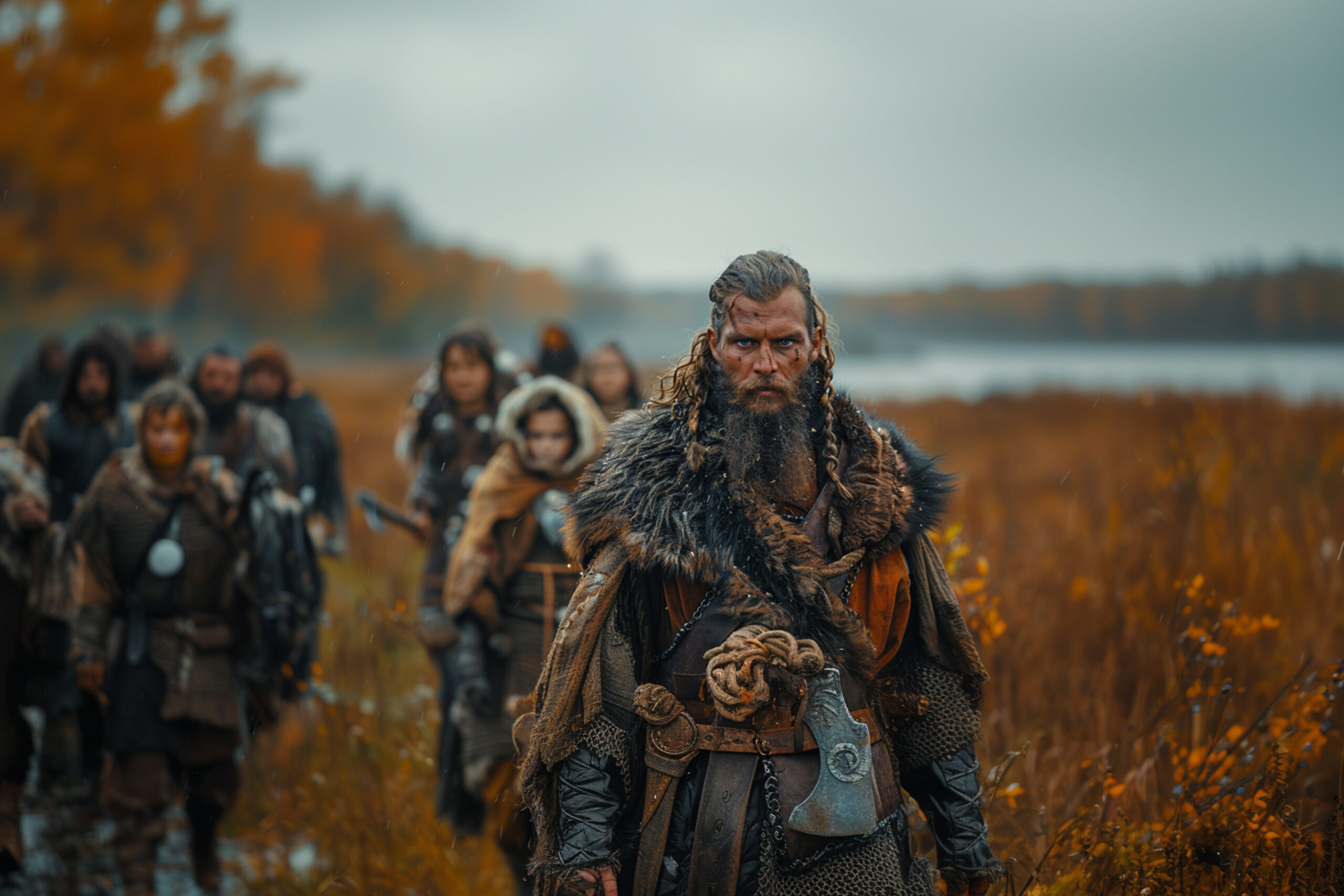
The Huns remain one of the most fascinating and mysterious groups in ancient history. Emerging from the vast steppes of Central Asia, they swept across Europe in the 4th and 5th centuries, leaving behind a legacy of fear, power, and transformation. Though their empire was short-lived, their influence on European history was immense. They changed the balance of power, accelerated the fall of the Western Roman Empire, and left a lasting mark on the cultural and political landscape of the continent.
This article explores the origins, rise, warfare, leadership, and legacy of the Huns — the fierce nomadic warriors who reshaped the ancient world.
Origins of the Huns
The exact origins of the Huns remain shrouded in mystery. Historical records about their early existence are sparse, and much of what we know comes from Roman and Byzantine sources. Most historians believe that the Huns were a confederation of nomadic tribes from Central Asia, possibly related to the Xiongnu — a powerful steppe people who once threatened China’s northern borders.
By the late 4th century CE, the Huns began to appear on the borders of Eastern Europe. They crossed the Volga River and entered the lands of the Alans, Goths, and other tribes, crushing or absorbing them along the way. Their sudden arrival set off a chain reaction known as the “Great Migration,” which disrupted the established order in Europe and weakened the Roman Empire’s defenses.
The Rise of the Huns in Europe
Once the Huns entered Europe, they quickly established themselves as a dominant military power. Their ability to move swiftly across great distances made them nearly unstoppable. They conquered vast territories stretching from the Black Sea to Central Europe.
By the early 5th century, the Huns had built an empire centered in the Great Hungarian Plain. They ruled over various subject peoples, including Ostrogoths, Gepids, and Alans. Unlike settled empires, the Huns had no permanent cities or bureaucracy. Instead, they relied on a complex system of loyalty, tribute, and military strength to maintain their authority.
The Huns’ rise was marked by their terrifying reputation. To the Romans and their neighbors, they were seen as ruthless invaders — fierce, fast, and merciless. Their unique way of life, appearance, and tactics made them both fascinating and terrifying to contemporary observers.
Life and Culture of the Huns
The Huns were nomads by nature. They lived on horseback, hunted for food, and moved their camps with the changing seasons. Their primary home was the open steppe, where they could graze their horses and cattle.
Their clothing and armor were practical for their mobile lifestyle — made of leather, fur, and iron. Their horses were small but incredibly tough, capable of traveling long distances without rest. The Huns were expert archers, trained from childhood to shoot arrows accurately while riding at full speed.
Socially, the Huns were organized into clans or tribes led by chieftains. These leaders owed allegiance to the supreme ruler, known as the “King of the Huns.” Their society valued courage, loyalty, and military skill above all else.
Warfare and Tactics
The Huns revolutionized the art of warfare. Their tactics relied on speed, surprise, and psychological terror. Using highly mobile cavalry units, they would encircle their enemies, unleash volleys of arrows, and then retreat quickly — drawing their opponents into traps.
Their most effective weapon was the composite bow, made from layers of wood, bone, and sinew. This powerful weapon could shoot arrows with deadly precision at long distances, giving the Huns a huge advantage in open battles.
The Huns also used diplomacy and intimidation to achieve their goals. They would demand tribute from weaker states and attack those who refused to pay. The Roman Empire itself often paid the Huns large sums of gold to keep them from invading.
Attila the Hun — The Scourge of God
The most famous Hun in history is Attila, who ruled from 434 to 453 CE. Under his leadership, the Huns reached the peak of their power and influence. Attila was both a brilliant strategist and a feared warlord. Known as the “Scourge of God,” he became a symbol of destruction and terror across Europe.
Attila unified the various Hun tribes and launched massive campaigns against both the Eastern and Western Roman Empires. He invaded the Balkans, ravaged cities, and forced the Eastern Romans to pay him immense tributes.
In 451 CE, Attila led his army into Gaul (modern-day France), where he clashed with a coalition of Romans and Visigoths at the Battle of the Catalaunian Plains. Though the battle ended inconclusively, it halted his advance into Western Europe. The following year, Attila invaded Italy and threatened Rome itself, but eventually withdrew — possibly due to famine, disease, or diplomatic persuasion by Pope Leo I.
Attila died unexpectedly in 453 CE, reportedly from a nosebleed on his wedding night. His death marked the beginning of the end for the Hun Empire. Without his leadership, the confederation quickly fell apart.
The Fall of the Huns
After Attila’s death, the unity of the Huns crumbled. His sons fought over succession, and the subject tribes rebelled. In 454 CE, the Huns suffered a crushing defeat at the Battle of Nedao against a coalition of former vassal tribes, including the Gepids and Ostrogoths.
This defeat effectively ended the Huns’ dominance in Europe. The remnants of their people scattered across the continent, some merging with other nomadic groups, others disappearing into history. Within a generation, the once-feared empire of the Huns was gone.
Legacy of the Huns
Though their empire vanished, the impact of the Huns on world history was profound. Their invasions destabilized Europe and triggered the migration of Germanic tribes into Roman territory — a movement that ultimately contributed to the fall of the Western Roman Empire in 476 CE.
The Huns also introduced new forms of cavalry warfare that influenced later nomadic empires, such as the Avars, Magyars, and Mongols. In many ways, Attila’s campaigns foreshadowed the later conquests of Genghis Khan.
Culturally, the Huns left behind little written record, but their legend endured. Medieval Europeans viewed them as a symbol of divine punishment and chaos — a reminder of how fragile civilization could be in the face of raw power. Modern historians, however, see them as a sophisticated nomadic society with complex political and military systems.
Conclusion
The story of the Huns is one of power, fear, and transformation. They appeared suddenly on the stage of history, conquered vast territories, and then vanished — leaving behind both devastation and change. Their fierce warriors, skilled horsemanship, and innovative tactics reshaped ancient warfare and altered the course of European history.
Though their empire was short-lived, the Huns’ influence echoed through centuries, reminding us how nomadic societies could challenge and even topple the greatest empires of their time. From the steppes of Asia to the fields of Europe, the legend of the Huns endures — a testament to the enduring power of courage, unity, and ambition.