
Introduction
The wordsearch puzzle is one of the most popular and timeless word games enjoyed by people of all ages. Whether you play it on paper, in a newspaper, or online, a wordsearch provides both entertainment and mental stimulation. In its simplest form, a grid of random letters hides words that you must uncover. But beyond being a fun pastime, wordsearch puzzles also offer educational value, memory improvement, and stress relief.
In this guide, we’ll explore the history of wordsearch puzzles, their benefits, strategies to solve them faster, and even their role in education. Whether you’re a casual player or a puzzle enthusiast, this article will give you everything you need to know about wordsearch games.
What Is a Wordsearch Puzzle?
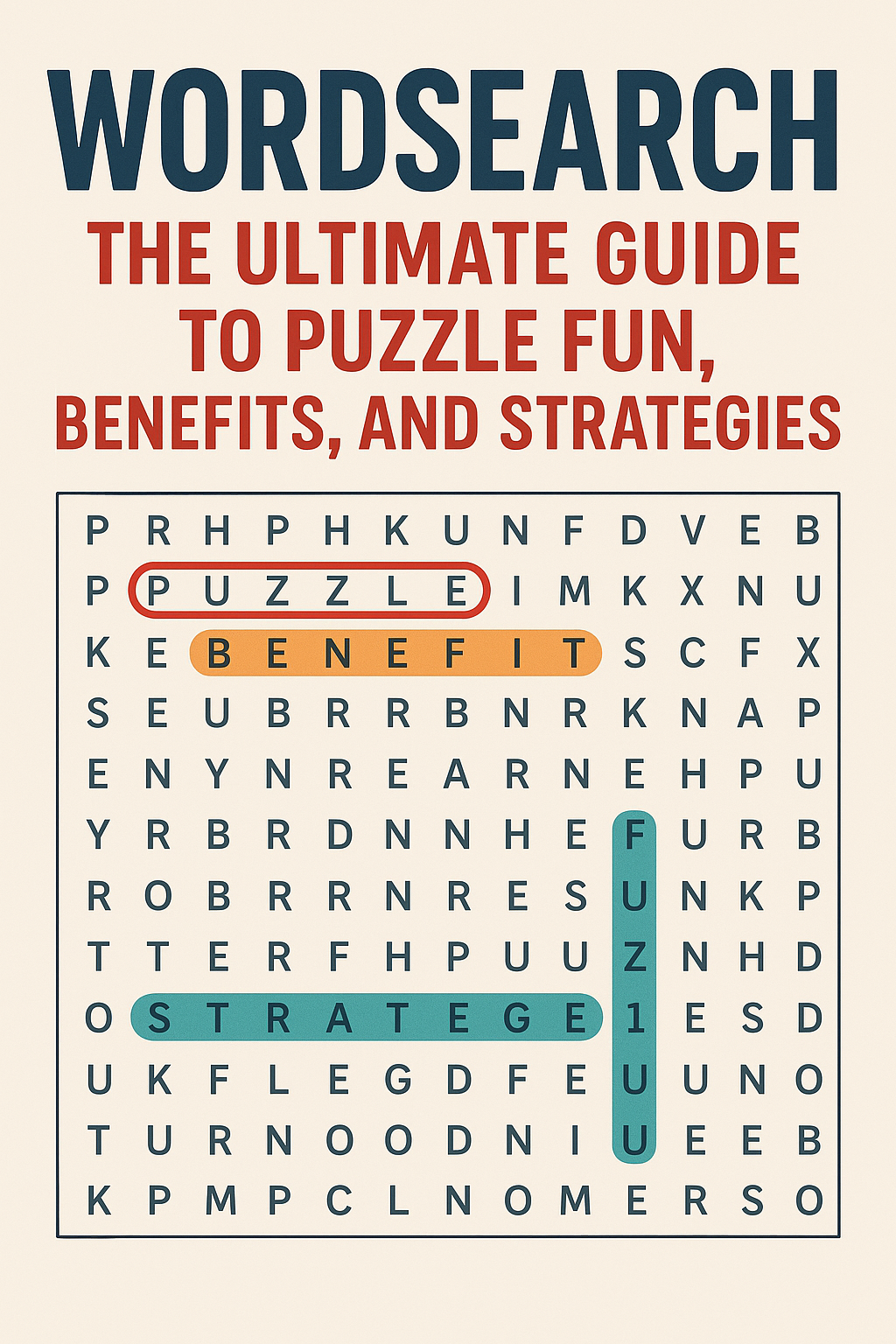
A wordsearch is a puzzle consisting of letters arranged in a grid. Players are tasked with finding hidden words placed horizontally, vertically, diagonally, or even backward. Words are usually connected to a theme, such as animals, countries, or holidays.
Key Features of a Wordsearch:
- Letter grid: A square or rectangular grid filled with random letters.
- Word list: A list of hidden words to be found.
- Word placement: Words may appear in multiple directions, making the puzzle challenging.
- Themes: Common in educational wordsearches to focus on vocabulary and spelling.
A Brief History of Wordsearch Puzzles
The wordsearch puzzle was first created by Norman E. Gibat in 1968 in the United States. He published it in a local Oklahoma newspaper, and it quickly gained popularity nationwide. Since then, wordsearch puzzles have become a staple in puzzle books, magazines, classrooms, and now—digital platforms and mobile apps.
Benefits of Playing Wordsearch Puzzles
Solving wordsearch puzzles is more than just fun. It provides a variety of cognitive, emotional, and educational benefits:
1. Boosts Vocabulary and Spelling
- Wordsearches help learners recognize words and improve spelling.
- Themed puzzles introduce new terms and concepts.
2. Enhances Memory and Focus
- Searching for hidden words trains your brain to focus on details.
- Improves short-term memory by recalling word patterns.
3. Reduces Stress and Anxiety
- Provides a relaxing activity that distracts from negative thoughts.
- Acts as a mindfulness exercise, keeping your brain engaged in the moment.
4. Improves Pattern Recognition
- Strengthens visual scanning abilities.
- Helps players spot word patterns quickly in a cluttered environment.
5. Educational Value for Students
- Teachers use wordsearch worksheets to teach vocabulary.
- Great for ESL (English as a Second Language) learners.
How to Solve Wordsearch Puzzles Effectively
While wordsearches may seem simple, strategies can make them easier and faster to solve.
Tips and Strategies:
- Scan the word list first – Familiarize yourself with all the words you need to find.
- Look for unique letters – Focus on unusual letters like Q, X, or Z.
- Search systematically – Start scanning row by row or column by column.
- Highlight or circle as you go – Helps keep track of found words.
- Check diagonals and backwards – Don’t forget that many puzzles hide words in tricky directions.
- Use word patterns – Recognize partial words or letter clusters.
Types of Wordsearch Puzzles
Not all wordsearches are the same. Here are some common variations:
1. Classic Wordsearch
- Standard grid with hidden words in multiple directions.
2. Themed Wordsearch
- Words related to a specific subject (e.g., Christmas, animals, space).
3. Cryptic Wordsearch
- Instead of a word list, players solve clues to figure out which words to find.
4. Number Wordsearch
- Numbers replace letters, adding mathematical or logical elements.
5. Online Wordsearch Apps
- Digital versions with time limits, scoring systems, and multiplayer options.
Wordsearch in Education
Teachers often use wordsearch worksheets to support learning. Here’s how they’re useful in classrooms:
- Language learning: Helps with vocabulary, spelling, and word recognition.
- Subject reinforcement: Puzzles can focus on science terms, history dates, or geography names.
- Engagement tool: Makes learning interactive and fun.
- Cross-generational activity: Great for both children and adults to share.
Wordsearch Puzzle Creation
Have you ever wanted to make your own wordsearch puzzle? With modern tools, it’s easier than ever.
Steps to Create Your Own Wordsearch:
- Choose a theme (e.g., animals, sports, geography).
- Select your word list (10–30 words, depending on grid size).
- Arrange words in the grid (horizontally, vertically, diagonally, and backwards).
- Fill empty spaces with random letters.
- Provide a word list for solvers.
There are many online wordsearch generators that allow you to create printable puzzles within minutes.
Fun Facts About Wordsearch
- The first wordsearch puzzle was called “Word-Cross.”
- Some puzzles hide secret phrases once all words are found.
- Large-scale wordsearch competitions are held worldwide.
- The Guinness World Record for the largest wordsearch puzzle included thousands of words.
Wordsearch vs. Crossword: What’s the Difference?
Many confuse wordsearch puzzles with crosswords. Here’s how they differ:
| Feature | Wordsearch | Crossword |
|---|---|---|
| Grid type | Random letters | Numbered squares |
| Objective | Find hidden words | Fill in clues |
| Difficulty | Easier to moderate | Often more challenging |
| Best for | Vocabulary, scanning skills | Word knowledge, problem-solving |
FAQs About Wordsearch
1. What is a wordsearch puzzle used for?
A wordsearch puzzle is mainly used for entertainment, vocabulary building, and brain exercise.
2. Are wordsearches good for the brain?
Yes! Wordsearches improve focus, memory, and pattern recognition while reducing stress.
3. Can kids solve wordsearch puzzles?
Absolutely. In fact, wordsearch for kids is one of the most common educational tools for teaching spelling and vocabulary.
4. Where can I play wordsearch puzzles online?
Many websites and apps offer free online wordsearch puzzles, including themed and timed challenges.
5. How do I make a custom wordsearch puzzle?
You can create one using online wordsearch generators by choosing a theme and inserting your word list.
Conclusion
The wordsearch puzzle has stood the test of time, offering fun, relaxation, and educational value to millions around the world. From its humble beginnings in a local newspaper to becoming a digital sensation, the wordsearch continues to challenge and entertain.
Whether you’re solving one for fun, using it as a learning tool, or even creating your own, wordsearch puzzles provide countless benefits for the brain and beyond.